
Midwest City Previous Resident Sources
An earlier Midwest City household is best approached as a layered question. The county property systems describe a parcel or a recorded transfer. Tax data describes an account and its payment status. Historical repositories can place a name, address, or family in a dated local context. Those roles should stay separate. An owner, a tax-mail recipient, a deed party, and a person mentioned in a newspaper may all be different relationships to the same place.
| Source | Years it covers | Where held | What it shows |
|---|---|---|---|
| Oklahoma County Assessor | Current online coverage; historical span not stated | County assessor search | Account, situs, owner, PIN, mailing or billing, legal description, and transaction clues |
| Oklahoma County Clerk land records | Online historical span not stated | OKCC Online, Clerk office, or request route | Recorded transfer parties, document type, date, legal description, and instrument or book-page clues |
| Oklahoma County Treasurer | Current year plus six prior paid or unpaid years; all unpaid context | County Treasurer public access | Tax account, payment status, and unreedeemed lien context |
| OHS genealogy collections | Collection-specific dates, including 1890-1928, 1923-1944, 1905-2020, and 1972-2014 runs | Oklahoma Historical Society Research Center | Date-bounded probate, divorce, funeral, obituary, death, census, and related leads |
| Gateway and Metro digital collections | Dates vary by item | Online historical repositories | Newspapers, photographs, maps, finding aids, and community context |
For a recent transfer, start with the parcel and deed paths. For an older household question, use the same legal description to hold the place steady, then add date-bounded archive evidence. Midwest City lies in Oklahoma County, but some Midwest City records are city-held, county-held, state-held, or archival. Sending the question to the correct custodian is part of the historical method.
Midwest City Parcel Records
The Oklahoma County Assessor search is the strongest starting point for a Midwest City address. It accepts name, physical address, account number, subdivision and block or lot, map number, deed book and page, and occupant or building name searches. A result can display account and property type, situs, owner names, Parcel PIN, mailing or billing address, acreage and value, legal description, and sales or deed history. Treat the account, PIN, and legal description as the bridge to older records.
Situs is the physical parcel location. Mailing or billing is where tax material goes. That difference is central when tracing an older household because a mailing address can belong to an owner, lender, management firm, former owner, or an out-of-state recipient. For a Midwest City parcel, the assessor's legal description is more stable than a street format, especially when an older document uses section, township, range, addition, block, or lot language. The county says its map is not a legal survey and directs users to the Clerk deed for the definitive legal description.
Midwest City Deed Records
Once the parcel details are recorded, use the Oklahoma County Clerk's ROD paths to follow the title record backward. OKCC Online offers name, address, document type, book and page, instrument number or PID, advanced, map, and plat routes. Search the current owner or grantee and the legal description together when possible. Then use the prior party and the same property description to locate the earlier link. Mark quitclaim deeds, survivorship deeds, trust or estate transfers, releases, mortgages, and liens separately because they do not all mean a sale or a household change.
A capture of the Oklahoma County Clerk land-records office identifies the custodian behind the recorded-document trail.
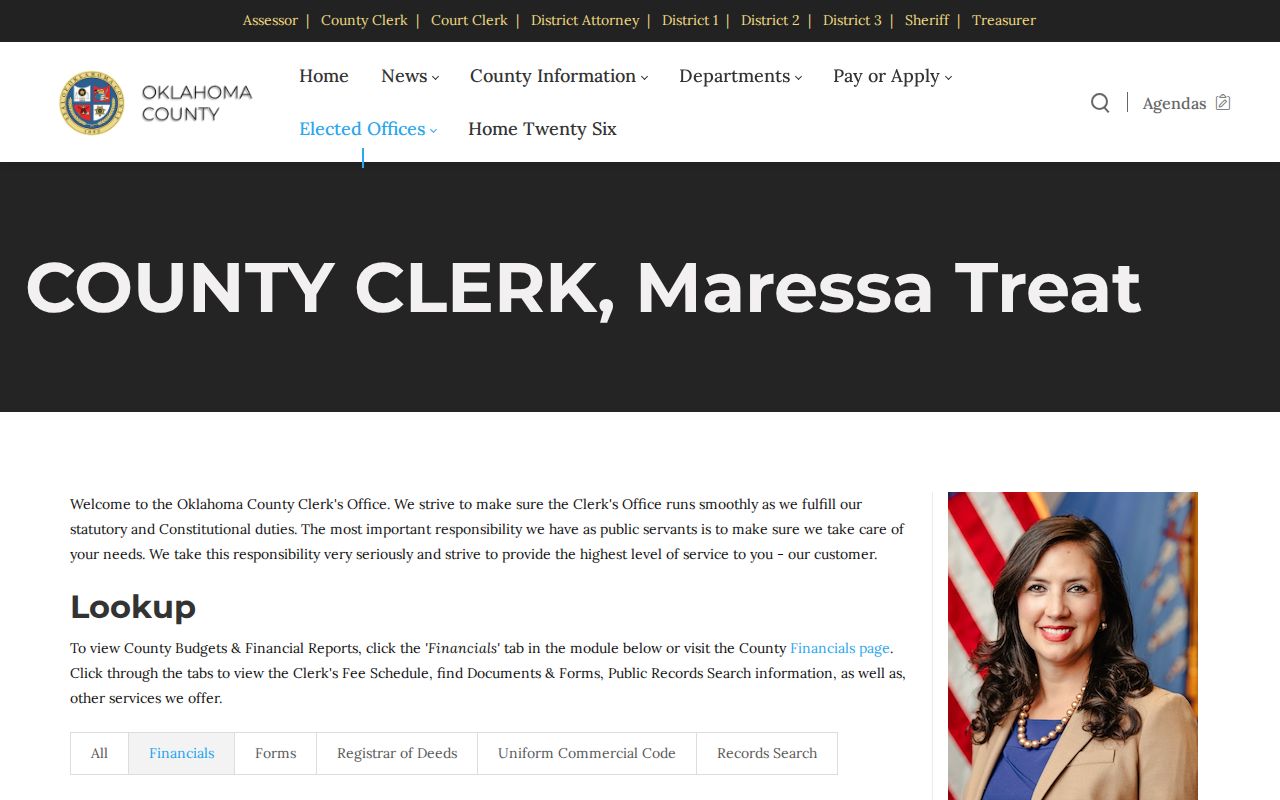
The Clerk's public online images are unofficial and redacted, may lag recording, and do not guarantee every document type. Certified or unredacted copies require the applicable fee. If the online index or image is incomplete, ask the Clerk for a date range, record type, grantor or grantee, legal description, and instrument or book-page clue. The County Clerk public request portal supplies the request and fee-schedule route.
- Record the assessor account, Parcel PIN, situs, and full legal description for the target Midwest City parcel.
- Find the latest recorded transfer through the Clerk's name, address, document, book-page, instrument, or advanced route.
- Copy the document type, recorded date, grantor, grantee, legal description, and instrument or book-page reference.
- Use the prior grantor or grantee and the same legal description to locate the preceding recorded transfer.
- Repeat only while the legal description still identifies the same parcel, then request a missing index or document from the custodian.
- Grantor and grantee
- The grantor is the party transferring an interest; the grantee is the party receiving it in the recorded instrument.
- Chain of title
- A dated sequence of recorded instruments tied to the same legal description, not a list of everyone who lived there.
- Legal description
- The formal parcel wording, such as addition, block, lot, or section information, used to identify land in a deed.
Midwest City Record Dates
A recorded date is not a move-in date. A person can sign or record a transfer before or after any change in daily residence. A deed can also name a trust, estate, lender, corporation, or several co-grantees. That is why a Midwest City address conclusion needs a second dated source tied to the address, such as a historical directory result, newspaper notice, city permit, or archive item. Keep the document date, recording date, address type, source date, and confidence level in separate notes.
High confidence comes from a recorded transfer with an exact legal description plus an independent dated address source. Medium confidence is an assessor history or directory address that aligns with the parcel but does not expressly state occupancy. Low confidence is a same-name newspaper, yearbook, or undated reference with no exact address. This scale protects the difference between a title history and a household history.
Note: A no-result in an index can reflect spelling, a document delay, a record type outside the online view, or an unsearched repository, rather than a final answer.
Midwest City Tax Records
The Treasurer is a useful time check, but not a resident register. The public-access search accepts an account number or name and address. It shows the current year plus six prior years for paid or unpaid accounts, all unpaid accounts regardless of year, and unreedeemed tax-sale lien context. The account and payment timeline can help identify a period to investigate, yet a tax mailing address is not proof that the recipient lived at the Midwest City property.
The Oklahoma County Treasurer public-access search shows the county tax-account route.
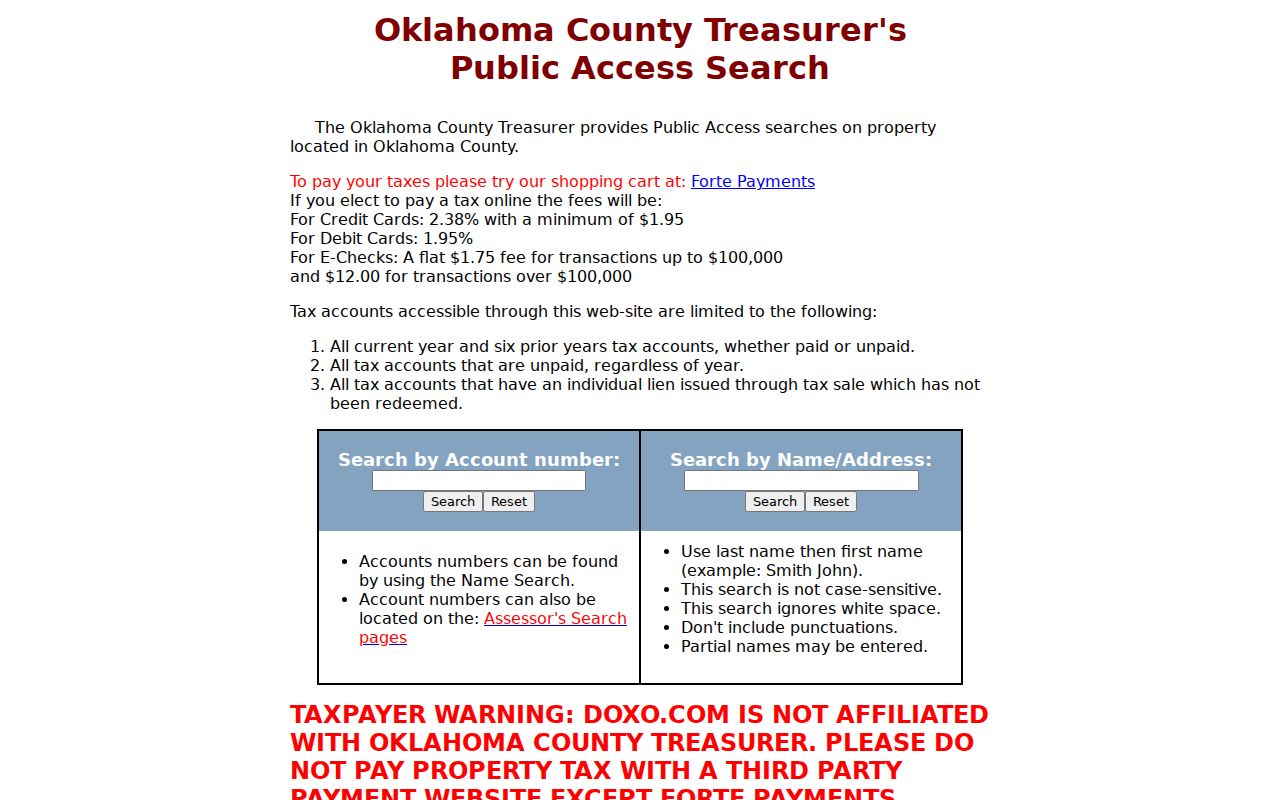
Use the Treasurer result to preserve the account number, year, paid or unpaid status, lien context, and access date. The Treasurer has a public computer, and transaction charges apply when a payment is made. Neither a paid tax year nor a mailing address establishes a Midwest City occupancy.
Midwest City Historical Records
The Oklahoma Historical Society home-history method connects the county parcel trail to directories, Sanborn maps, newspapers, and other dated sources. Search Gateway by name and address, trying both numeric and spelled-out street numbers. Search a subdivision or nearby landmark as well. A newspaper notice may be a social event, a public meeting, a property item, or another type of mention, so the item label matters as much as the name. For school-era context, OHS lists Midwest City, Midwest, Monroney, and Schwartz yearbooks for specific years, but a yearbook alone is not an address record.
The Oklahoma Historical Society genealogy resources show the date-bounded historical collections available for a Midwest City trail.
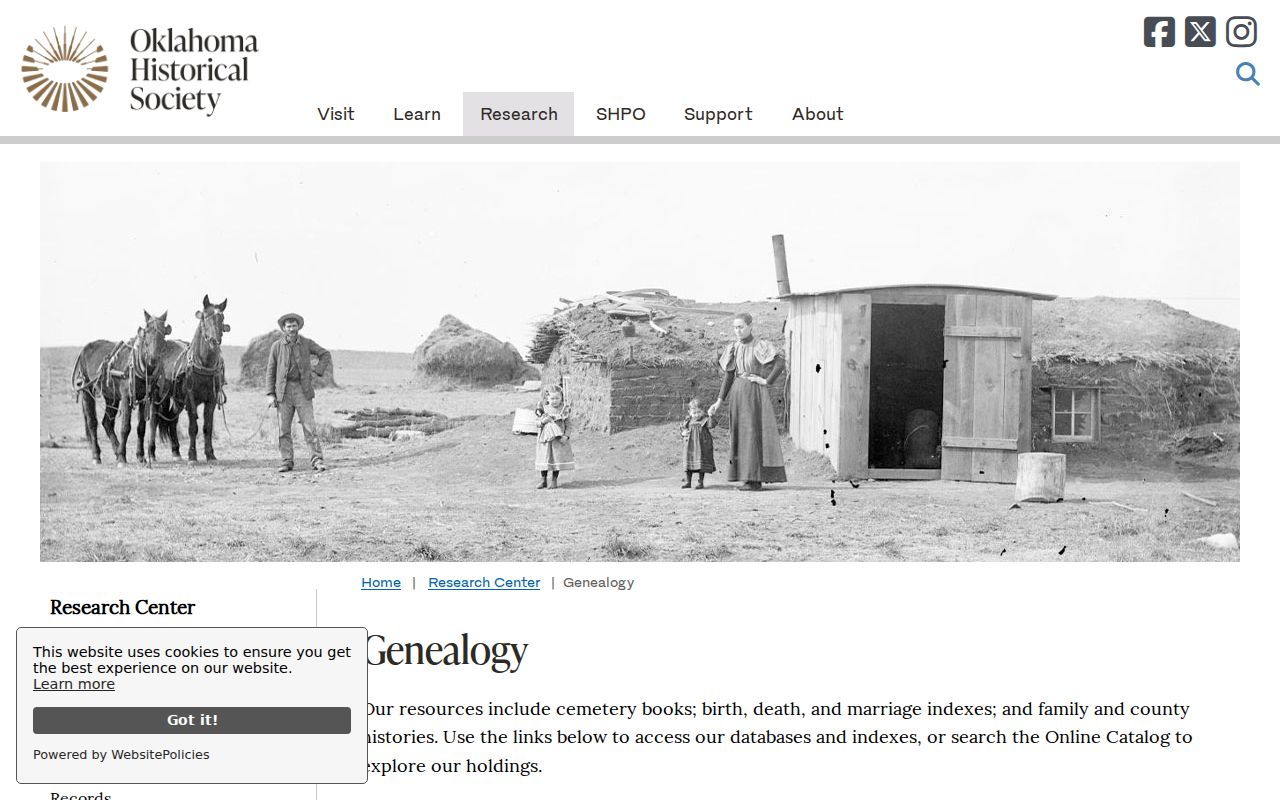
Those sources include Oklahoma County probate from 1890 to 1928, divorce from 1923 to 1944, funeral records and programs from 1905 to 2020, Oklahoman obituaries from 1972 to 2014, and other date-specific material. The historical shelves and their access limits are detailed in the Midwest City city directories collection.
Midwest City Gateway Records
Gateway can supply an independent event date between property records. Search the full address, then try the street name, neighborhood name, and a nearby public landmark. Preserve the item title, date, collection, identifier, description, and rights note. Midwest City grew from a 1942 military-support community near Tinker, and postwar subdivision growth means an older lead may sit in county, regional Oklahoma City, or city collection context rather than in a single city directory.
The Gateway to Oklahoma History collection search provides the newspaper and digitized-item path.
Gateway can help date an address connection, but a visit, notice, or public event should remain labeled as that event rather than being converted into a residence claim.
Midwest City Digital Records
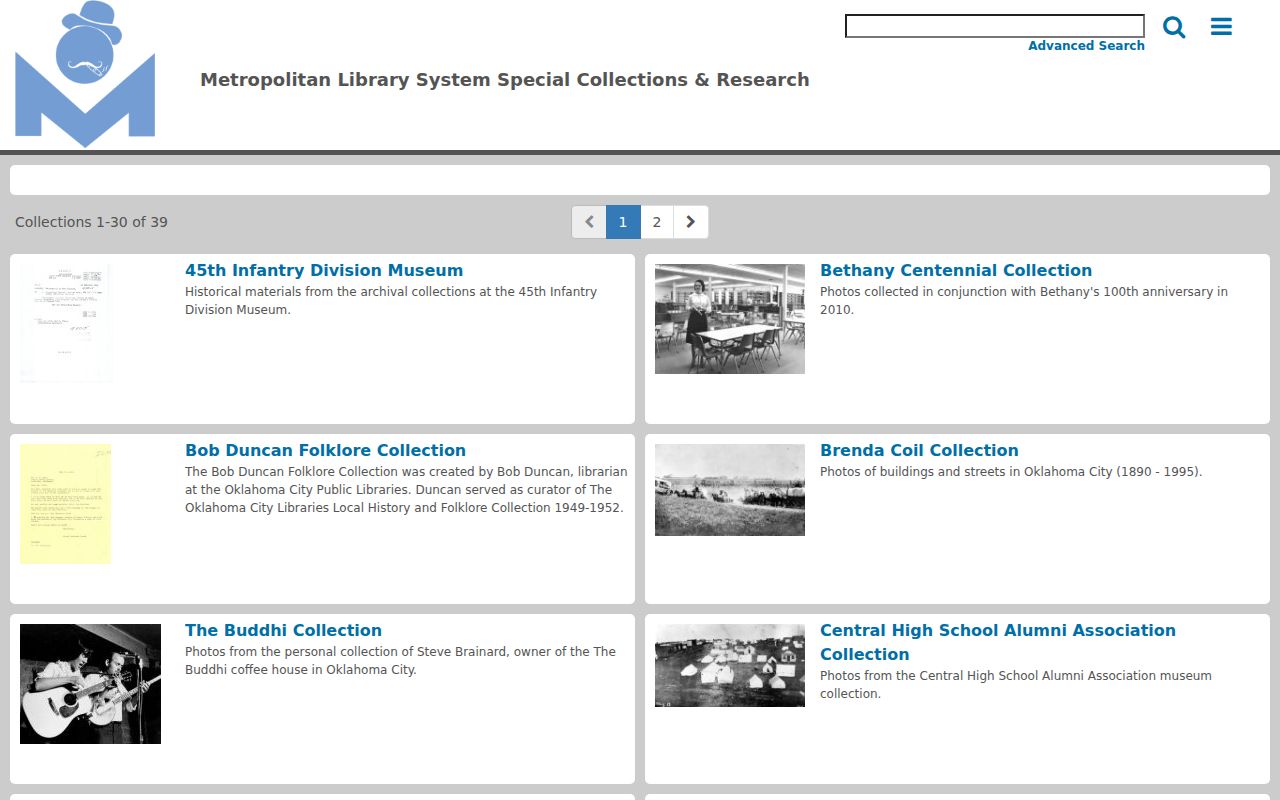
Metro Library Special Collections offers another access channel when the online Midwest City directory form returns no match. Its collections include photographs, postcards, personal-history interviews, digital collections, and finding aids for Oklahoma City, Oklahoma County, and Oklahoma history. The Oklahoma Room is open Monday through Friday, 9 to 5, and an appointment is advised for material or detailed help. The digital platform can expose an item, while staff or a finding aid can identify related material that a keyword query does not surface.
The Metro Library digital collections provide a second online archive path for Midwest City historical context.
Document the collection name, item identifier, date, and whether the result is a scan, index, transcription, or finding aid before placing it on an address timeline.
Midwest City Resident Confidence
Pair historical directories and censuses as date markers, not as interchangeable proof. OHS lists the 1890 Oklahoma Territorial Census and the 1933 Unemployed Relief Census among its historical resources, along with directories, phone books, and yearbooks. For Midwest City, the online City and Year directory query returned no match. Preserve that gap, then use the Research Center, Metro staff, Gateway, and the deed chain to seek a dated source that fits the period. A regional Oklahoma City directory from 1889 through the 1940s is context only unless it identifies the target address in a way that matches the parcel trail.
A practical process is: exact street address and legal description, then assessor account and recorded transfer, then tax-year context, then directory or census search, then Gateway or yearbook context, followed by a confidence label. Keep the source date next to every relationship. This makes it clear whether the evidence shows a recorded party, tax recipient, person named in an item, or a well-supported earlier occupant.
Lawful house history. Use Midwest City past-resident research for family history, property history, or personal civic curiosity. Do not use a public record or a missing-address gap to track, harass, or endanger a living person.